
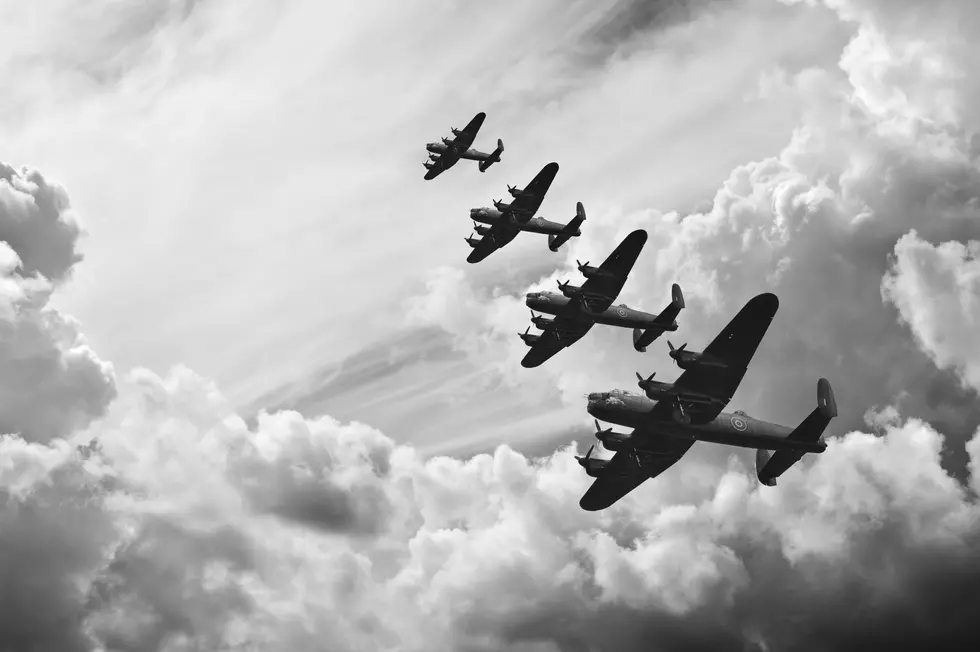
Mission: To Find Lost WWII Crash Sites In Wyoming
The Casper/Natrona County Airport was built for one purpose: to train pilots and mechanics for World War II. Many were lost to crashes for different reasons.
There were 90 fatal crashes during those years of training. About 130 men were killed. What could be found of those bodies and most of the wreckage were recovered at the time. But a lot was left out there.
Today, nature has covered most of the shattered remains. For the past few years, a team has been trying to find these crash sites to memorialize those lost crews. Find out more about them and what they do at this link.
The goal of today's search is not to bring back what is left out there. But to find these sites and mark them. Any relatives are contacted for a memorial service at the site, and a plaque is laid there.
Six sites have been found so far, including one on Casper Mountain. Services were held with what family members could be tracked down from across the nation.
Many ranchers have no idea that a crash site is on their property. Sometimes it takes a little coaxing to convince them to allow the team to search their property. But once the crash site is rediscovered, those ranchers are more than willing to help.
In the interview below, Wyoming's radio talk host Glenn Woods speaks with Mr. Mike Milliken, who leads the search team. Mr. Milliken works closely with the Wyoming Veterans Museum in Casper, which is located at the airport.
In March 1942, the U.S. Army Corps began the construction of the new Army Air Base at Casper. The site they selected was a high, flat, sagebrush-covered terrace located nine miles west of town on U.S. Highway 20-26 and adjacent to the Chicago, Burlington & Quincy railroad. The base was built to accommodate 20,000 men to be trained.
The base grew to almost a third the size of its host city of Casper. Working there were 2,250 Army Air Force personnel and 800 civilians. During peak training times, the crewmen increased the base population to more than 6,000. Roughly 16,000 B-17 and B-24 bomber crew members trained at the facility.
Young men anywhere from 18 years old to their early twenties were quickly trained in complex machines to go and fight in a war. This type of speed training would lead to problems.
There would be mechanical problems, navigation problems, weather, and issues with night flying. It was known that men would be lost. The goal is to honor them and make sure they are not forgotten
WOW - Amaizing Cheyenne Air Show 2026
Gallery Credit: Glenn Woods