
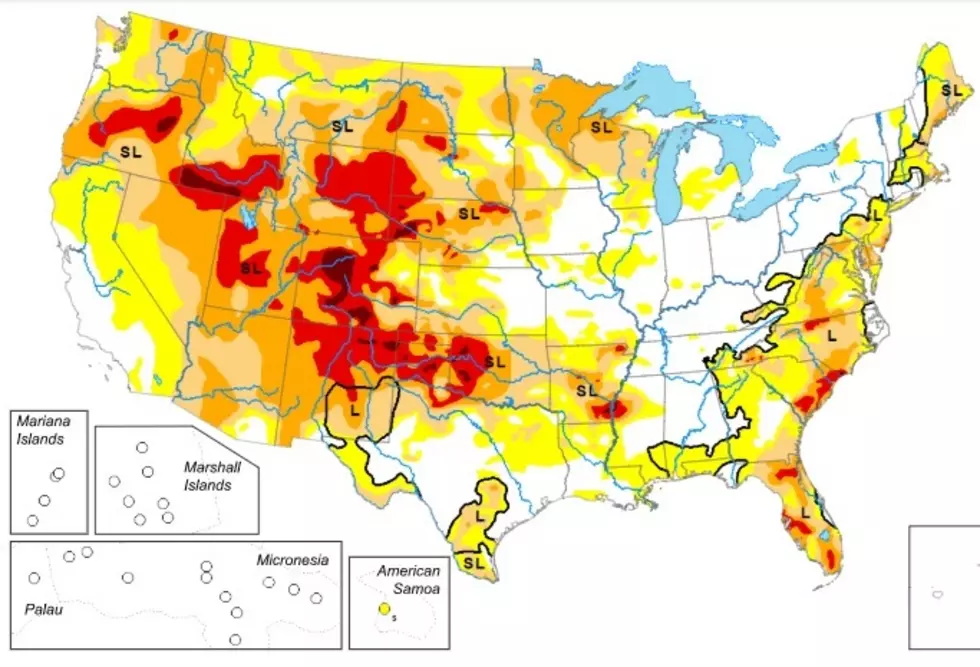
Western Dought Is Bad, Longterm Forecast Is Hopeful
In some parts of the USA, drought conditions have eased a bit. But not in the Western states.
A good section of them midle of the nation is now drought-free. There has even been a little drought relief on the East Coast, compared to where it was a few months ago.
There seems to be a break in this cycle.
Persistent multi-year drying and above-normal summer temperatures drive extreme to exceptional drought across interior Oregon, southern Idaho, Wyoming, the Great Basin, and Utah, severely straining rangelands and reducing major reservoirs like Lake Mead to historic lows. You can track real-time intensity updates and maps via the U.S. Drought Monitor.
This is nothing new for Western states or anywhere across North America. The American West has a long history of severe dry periods, marked by the devastating 1930s Dust Bowl, the 1950s drought, and an ongoing 21st-century megadrought that tree-ring data shows is the region's driest 22-year stretch in at least 1,200 years
This is one of those dry times that appears in cycles. It's hard, but we have been here before. We have even been here before humans were here.
Climate reconstructions using tree rings show that multi-decade megadroughts occurred naturally in the Southwest during the 1100s, 1200s, and late 1500s.
These historical events proved that extreme, long-lasting dry spells are a normal feature of the region's climate history long before modern human influence.
According to meteorologists, the blocking patterns that have kept monsoon moisture out of the region are breaking down and opening up. That's what brought the rain of the past few days. Long-term forecasts are hopeful.
Old Medicine Of The Chugwater Wyoming Drugstore
Gallery Credit: Glenn Woods